I’m David Jones, and I have the privilege of being the Senior Responsible Owner for Defra’s largest research and development programme, the Natural Capital and Ecosystem Assessment (NCEA). Today, I am excited to share an update on a major milestone for the programme – the first release of Analysis Ready Data from the UK’s largest ever field surveys.
The NCEA programme is all about turbocharging nature's recovery through delivering robust and up to date evidence on the terrestrial and freshwater environment. I’m therefore very pleased that we have now published our first datasets relating to soil health, rivers and streams, and trees.
This marks a significant step forward in understanding the condition of England’s natural capital.
What is being published?
Our NCEA programme is publishing its datasets as analysis-ready data. They are cleaned, standardised, quality-assured data that are well-documented, accessible, and prepared for analysis. This analysis-ready data are published under the Open Government Licence which means they are free to use and can be accessed via the NCEA’s ‘Find Natural Capital Data’ search service.
These newly released datasets cover the first year of the programme’s data collection (2023/24), alongside data from the preparation year (2022/23), and include outputs from both terrestrial and freshwater surveys.
When these multi-year surveys complete in 2028, the programme will have provided a representative and unbiased picture of England’s terrestrial and freshwater ecosystems at a national and regional basis.
Why does this matter?
Every dataset we share helps build a clearer picture of England’s natural capital. Natural capital is the term encompassing all natural assets that form the environment we live in.
Natural capital knowledge enables us to improve people’s wellbeing while accelerating economic growth, by placing the benefits of nature to society at the heart of decision-making.
By making high-quality environmental data openly available, we’re giving policymakers, researchers, and anyone with an interest in nature the tools they need to make better decisions.
For me, this is what the NCEA programme is all about: providing the evidence needed to drive action that helps improve the environment.
Whether it’s shaping policy, driving research, or helping the public engage with the natural world - the data we’re collecting today, will make a real difference for the future.
Understanding the data: important context and limitations
Our programme is designed to transform environmental decision-making in England by generating a ‘whole system’ picture of the state of our natural environment. Data collection has been structured as a representative random stratified sample, to produce an unbiased view of England’s natural capital assets and ecosystems.
The datasets published to date represent only a partial subset of the full baseline, specifically, data from the preparation year (2022/23) and the first full year of collection (2023/24). They are experimental outputs and may not be fully representative or suitable for many analytical purposes. Before using the data, please therefore read the limitations statement and supporting documentation to the dataset for more information on suitable uses.
December 2025 data release
This week, I’m pleased to share that the following datasets are being published:
- England Ecosystem Survey – soils physiochemical data
Delivered through Natural England, this dataset contributes to the development of the Environmental Indicator Framework E7 Healthy Soils indicator. They include measurements of soil chemical and physical properties and earthworm populations.
- River Surveillance Network and Small Streams Network
Delivered through the Environment Agency (EA), these freshwater monitoring datasets include water chemistry, chemical pollutants, and ecological data. To read more from the EA on this, read their latest blog.
- National Forest Inventory Plus and Trees Outside of Woodlands
Delivered through Forest Research, this includes data on woodland water quality, soil condition, air quality, eDNA soil biodiversity and woodland canopy data, and Trees Outside Woodland field data. They measure ecological condition and test innovative approaches such as eDNA analysis.
- Mycorrhizal baseline dataset
Delivered through Royal Botanic Gardens, Kew, this dataset provides diversity, composition, abundance and plant-fungal interaction data for mycorrhizal fungi across multiple habitat types.
NCEA data in practice
Here’s a few examples of how the datasets are being used across Defra.
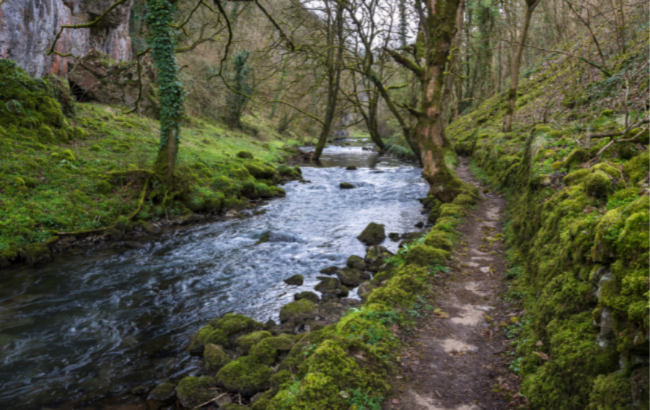
For water, we’re using data from NCEA’s River Surveillance Network to help track the health of England’s rivers.
This information will feed into interim national reporting on the state of the water environment indicator (B3) and provide supporting evidence to complement existing regulatory monitoring for the Water Framework Directive. It is providing up to date, unbiased, and nationally representative data, helping us make better decisions for water quality and river health.
For soils, NCEA is collecting detailed information on soils – including physical, chemical, and biological properties – through the England Ecosystem Survey and National Forest Inventory Plus.
This data will be a key input for the Healthy Soils Indicator, which is part of the national Environmental Indicator Framework. Once we’ve completed the full five years of monitoring, we’ll have a complete picture of soil health across England and its regions.
Next steps
Looking ahead, we’ve got some exciting plans. The next analysis-ready data release is scheduled for March 2026, and regular publications will continue through to the end of the programme in 2028/29. To keep up to date on future releases and other programme developments, please subscribe to our NCEA mailing list.
If you’re interested in exploring the data we have released, visit the NCEA ‘Find Natural Capital Data’ search service to find out more.
You can also search for Earth Observation products and data delivered earlier in the programme, such as the Living England map, the England Peat Map and the Trees Outside Woodlands map.
If you have any questions or would like to provide feedback on the data, please email us at: NCEAdata@defra.gov.uk.
//
Wondering who the NCEA are?
NCEA is Defra’s largest Research and Development programme, working hand-in-hand with a fantastic network of partners and arms-length bodies:
- Environment Agency
- Forest Research
- Joint Nature Conservation Committee
- Natural England
- Royal Botanic Gardens, Kew
Together, they are delivering a nationwide survey of England’s natural capital and ecosystems, mapping their location and extent, and collecting data on condition to inform environmental policy and decision-making.
To read more about the NCEA programmes, read our previous blog posts.
Leave a comment