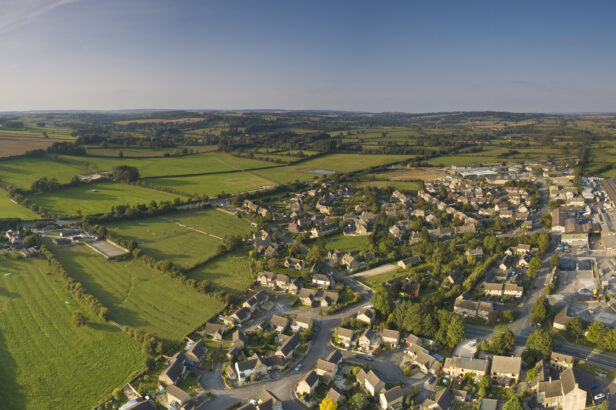
England has around 130,000 square kilometres of land, and it faces more demands than ever before. We need to build more homes, generate clean energy and maintain food production, all while restoring nature.
Land is the foundation of our economy, but it is also finite. Without a strategic approach, we risk these competing demands pulling in different directions, when the evidence shows we have enough land to deliver them all.
That’s why today the Government has published England’s first ever Land Use Framework, which shows how through smarter planning and the right data and tools communities, farmers, landowners and developers can make informed decisions about land use.
In this post, we’ll set out everything you need to know about the framework.
What is the Land Use Framework?
The Land Use Framework provides the blueprint for how land in England can be used effectively.
It shows clearly that when we play to the strengths of our varied landscapes, we can build the homes and infrastructure we need, while also ensuring we have the space required to produce food and restore nature.
As part of this, we’re committing to ‘making land digital’, increasing accessibility and transparency around land use by sharing our environmental datasets and mapping systems. This means giving communities and developers access to world-class data to use alongside their local knowledge.
Why is land use such a pressing issue?
For too long decisions about where to build homes, generate energy and focus nature recovery have been made in isolation, without a strategic overview.
In 2025 the government started a national conversation on land use. Feedback highlighted fragmented decision-making and a lack of information as significant barriers to strategic planning decisions.
The framework we’re publishing today provides a more consistent spatial vision for England by aligning national and local plans. It commits to providing the data and tools so decisions on housing and energy are faster, clearer and more predictable, which will unlock economic growth.
What does the Land Use Framework mean for nature and the environment?
England is one of the most nature-depleted countries in the world. The Land Use Framework will ensure we have sufficient land to deliver key nature environment and climate targets.
The framework will help identify where habitat restoration is most needed and ensure space for nature is integrated into urban, as well as rural, landscapes. It sets a clear pathway to nature recovery, supporting the government's 30by30 commitment. The Framework also sets out how incentives will be optimised to deliver for nature and resilient food production.
For instance, England’s National Parks and National Landscapes include some of our most iconic and inspiring places, underpinning our health, economy and climate. Without the restoration of these protected landscapes, we will not achieve our international commitment to protect 30% of our land for nature by 2030, or our Environment Act targets.
What does the Land Use Framework mean for farming?
The Land Use Framework makes a clear, long-term commitment to maintain the amount of food we produce. It will do this by increasing farm productivity and developing sector plans. These plans will underpin our future food security and drive economic growth, ensuring the most productive agricultural land is safeguarded for food production.
Farmers will benefit from data and tools the Government are committing to develop to help them future-proof their businesses in the face of extreme weather and market shocks. The framework will give more rights and greater certainty to tenant farmers. It also sets our reforms to simplify payment systems and digitise land data submissions to make it easier for farmers to work with Government on land use.
What does the Land Use Framework mean for housing and planning?
The framework will provide the data to help us accelerate delivery of 1.5 million new homes whilst protecting our best farmland and restoring nature. By opening up access to high-quality data, planners, developers and local authorities will be able to reduce uncertainty, lower development costs and mobilise investment in nature-based solutions to help protect homes, businesses and infrastructure from the impacts of climate change.
This will also help align spatial plans across government, so that decisions about housing, energy infrastructure and nature recovery are considered together, rather than in isolation.
Vision for the future
The framework sets out an ambitious long-term vision for England's landscapes. This includes that, by 2030, we envision at least 95% of electricity generated from clean power, 350,000 football pitches worth of new wildlife-rich habitat created, and an increased urban tree canopy.
By 2050, the Government's vision is for multifunctional landscapes to be the norm where food production, nature recovery, clean energy and thriving communities are planned together, not in competition. Woodland cover will increase to 16.5%, rivers will run cleaner and fewer homes will be built in flood-risk areas. Through nature’s recovery, our National Parks and National Landscapes will protect communities from flooding, fight climate change, boost the nation’s health, and foster a thriving green economy.
This is a future where England's land works harder and smarter for everyone.
What happens next
This is just the beginning of a more joined-up approach to how we use England's land.
Over the next year, we will establish a dedicated Land Use Unit to drive the delivery of this framework. This will align national and local plans and ensure England’s landscapes deliver for development, food production and nature recovery together.
We will also continue to refine our analysis and publish updates on a dedicated Land Use Framework GOV.UK page.
If you are interested in hearing more about land use, subscribe to the Defra Environment Blog.
4 comments
Comment by Paul Lovatt-Smith posted on
This represents nothing more than how much time and effort can be wasted if those in charge have the wrong priorities. Anyone who thinks that a country which imports nearly half its food and has amongst the world's most nature-depleted ecosystems has the luxury of being able to use undeveloped land for anything other than sustainable food production is living in cloud cuckoo land. I feel sorry for those poor people who have had to spend their time and energy on this dead-end project.
Comment by Roderick Leslie posted on
Except for the facts that (1) we feed half our grain to animals to support a meat and super processed food diet that is making us ill.Food security is not about whether there are no just ripe avocados on the shelves - its about whether we have enough to eat and a balanced diet. Britain could feed itself quite comfortably tomorrow.
(2) Existing intensive farming is already in danger - and putting others in danger through most obviously flooding. But last year heralded the opposite risk - drought - which looms large over our farm productivity
(3) Its not just about the rural, in fact thee rural is a small part - with estimates of 1 in 10 houses liable to flooding in the near future it makes absolute sense to completely re-engineer our water catchments to both slow the flow and retain more water in the landscape.
Comment by Denise Scott posted on
Within our urban environments there are many opportunities to make space for wildlife. We can build corridors of beautiful wild plants and native trees that join our parklands together for the benefit of nature. We are part of nature not separate. If you have a garden plant native species and if you are building a driveway make it porous. Grow a meadow not a lawn and get your local community involved. If you are a councillor or MP please advocate for nature and allow grass to grow long and plant meadows. An example of this is Alwoodly2030 in Leeds. It’s early days but there is great support for the better living conditions it will bring to us all.
Comment by Robert Gillespie posted on
It's taken a long time, but perhaps we can look forward to a change for the BETTER!