Last week I had the privilege of joining Defra Secretary of State Emma Reynolds on her visit to China - a trip that offered a genuine opportunity to deepen one of the world's most important bilateral relationships on nature and the environment.
I was also able to visit Chengdu and Lijiang, in south-west China, to meet key stakeholders to discuss science, nature finance and national parks collaboration.
The visit came at a critical moment. With CBD COP17 on the horizon in Armenia, and global negotiations on plastics pollution reaching a pivotal stage, the case for strong, practical UK-China cooperation on nature has never been clearer.
A dialogue built on shared ambition
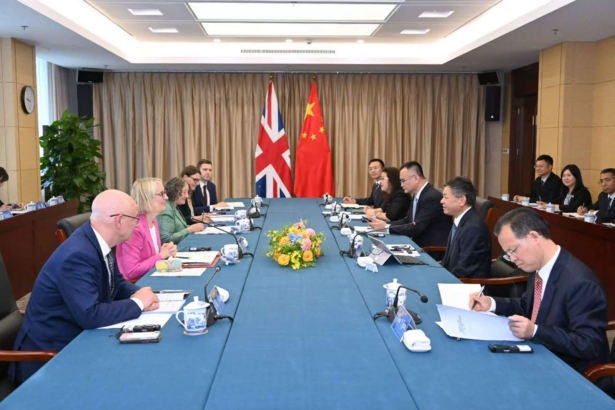
At the heart of the programme was the second UK-China Environment Dialogue, hosted by Minister Huang and China's Ministry of Ecology and Environment. This is exactly the kind of forum we need – a space to turn shared ambition into concrete action, and to give our officials a clear direction for the months ahead.
Our discussions spanned a wide range of shared global challenges: biodiversity and ecosystem protection, nature finance, chemicals management and plastics pollution, and how our two countries can work more effectively together in multilateral fora, including the biodiversity and climate COPs.
I was encouraged by both the depth and the forward-looking spirit of the conversation.
Both sides agreed to continue technical exchanges on plastics pollution and ecosystem resilienceresilience, and we committed to exploring the co-hosting of events at CBD COP17. The UK will lead on nature finance, building on the work of the International Advisory Panel on Biodiversity Credits (IAPB), while China's Ministry of Ecology and Environment will lead on climate-nature synergies. That kind of complementary leadership, with each side bringing its distinctive strengths, is exactly how international cooperation should work.
We are also working towards establishing a High-Level Climate and Nature Partnership agreed by the Prime Minister and President Xi when they met in January.
Nature as critical infrastructure
One of the most important messages I wanted to reinforce throughout this visit is that nature is not a separate concern from trade, food security and economic resilience. It underpins all of them.
Many of the sectors at the heart of UK-China economic cooperation: agriculture, food systems and sustainable supply chains are increasingly shaped by environmental standards and the health of natural systems. Forests regulate rainfall. Healthy soils produce food. Functioning ecosystems buffer against climate shocks. When we invest in nature, we are investing in the foundations of long-term economic stability.
I saw this first hand in Lijiang while visiting the Alpine Botanical Garden and Highland Field Station – which hosts 10% of China’s plant species, where sustained scientific exchanges are critical for plant climate resilience and adaptation.
Whether we are talking about deforestation-free supply chains, sustainable agriculture or the role of private finance in nature-positive land use, these conversations are inseparable from the wider economic relationship between our two countries.
More than half of the global economy is moderately or highly dependent on nature. It is estimated that $700 billion a year is needed to halt and reverse nature loss globally. Mobilising finance at that scale requires exactly the kind of bilateral and multilateral cooperation we were building this week.
A story of what's possible: the Milu Deer and Giant Panda
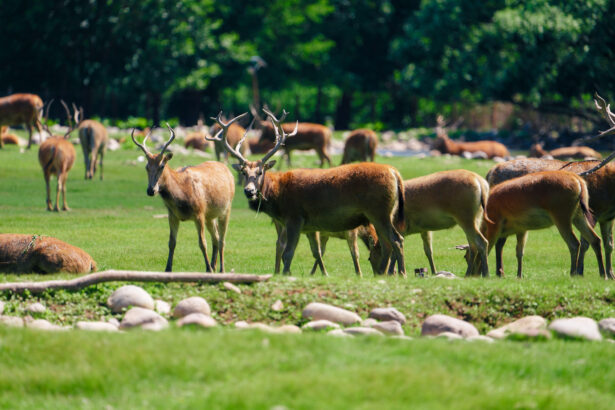
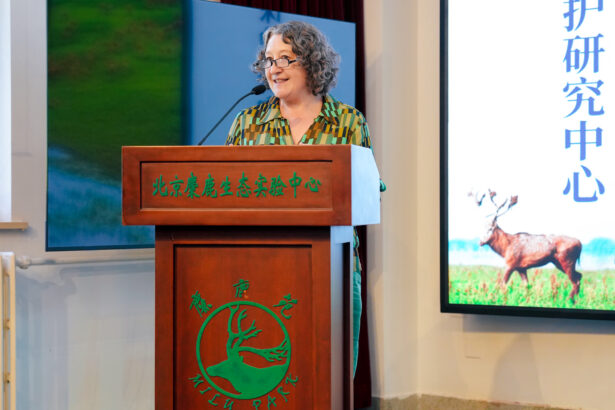
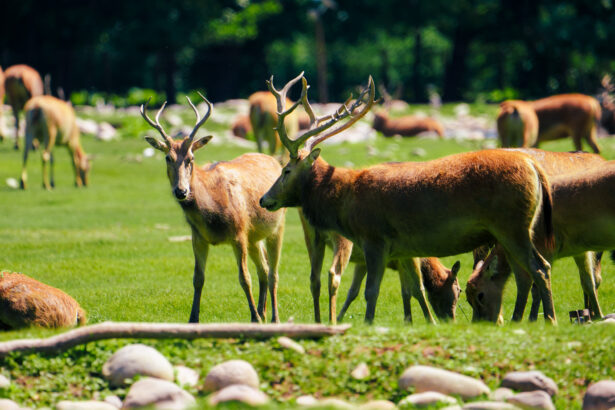
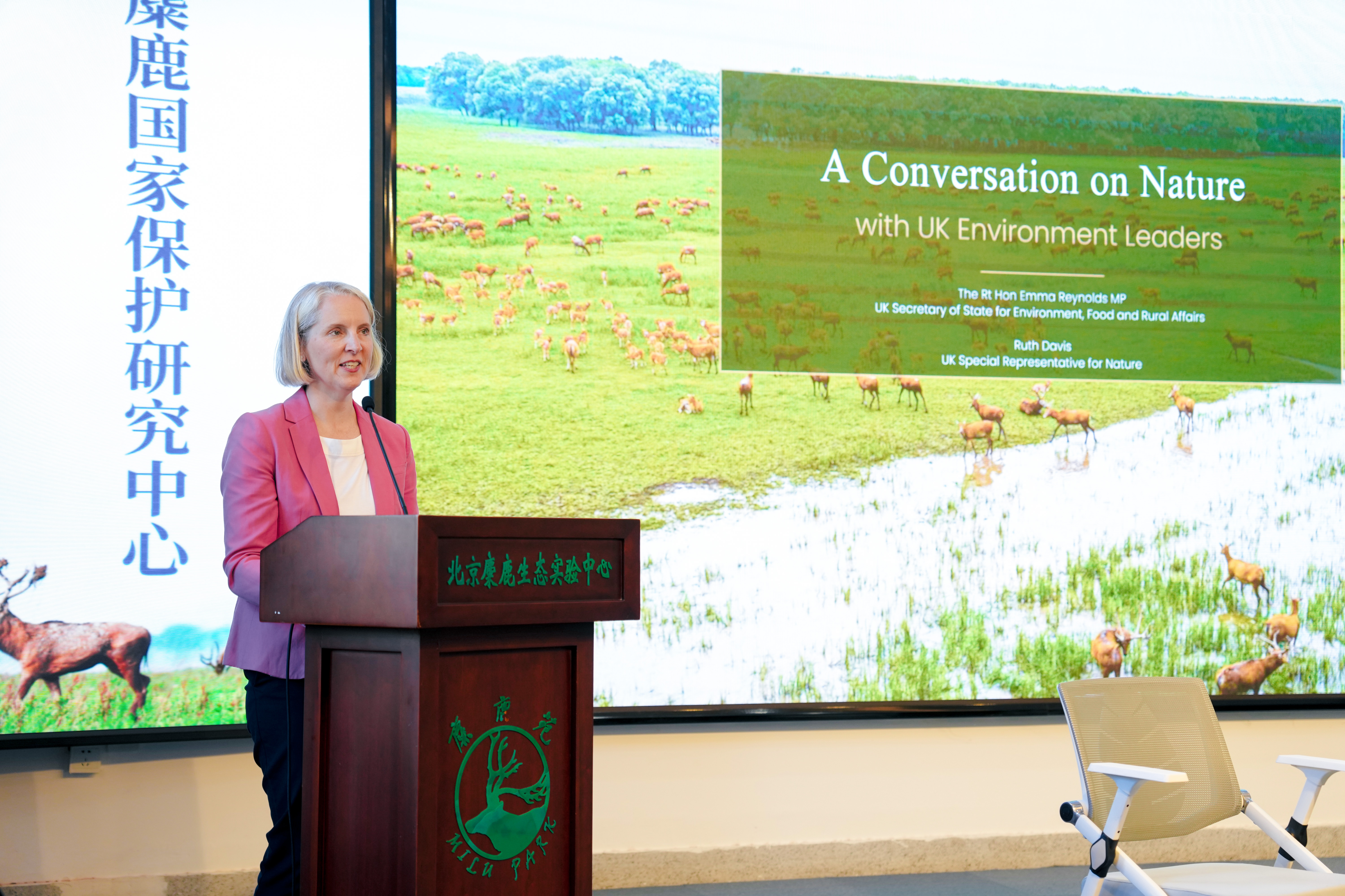
One of the highlights of the visit was joining the Secretary of State at Milu Deer Park, a place that tells one of the most remarkable stories in conservation.
The Milu deer, native to China, became extinct in the wild in the early 20th century. A herd survived in the UK, and through decades of patient, determined collaboration between UK and Chinese conservationists, the species was successfully reintroduced to China.
Today, the population is thriving.
I had the privilege of delivering remarks alongside the Secretary of State and joining a discussion with young nature professionals and conservationists who are now carrying that legacy forward. Their energy, expertise and commitment to international collaboration was genuinely inspiring.
This enthusiasm on shared priorities on flagship species and critical ecosystem conservation also shone through during my visit to the Giant Panda National Park in Chengdu. I saw firsthand how degraded landscapes are being restored, why a site is prioritised and how restoration measures such as native vegetation recovery are crucial for long-lasting stewardship. I am proud that the UK collaborates on protected areas through the 2023 UK-China National Park partnership, which enables exchanges between Giant Panda, Lake District and Loch Lomond National Parks.
The Milu deer story is a powerful reminder of what long-term partnership can achieve, and our National Parks collaboration are a powerful example of the kind of ambition we need to bring to the challenges ahead.
China – an important trading partner
China is one of the most important markets outside the EU for UK food and drink exports. Deepening the trade co-operation between the UK and Chinese governments and industries is a key priority for Defra, as we seek to secure and maintain market access and economic growth.
The Secretary of State joined a roundtable hosted by the China British Business Council. They engaged directly with member companies and industry bodies, listening to their experiences and priorities in the China market and encouraging an open and frank exchange of views on key issues affecting their operations. The discussion provided an opportunity for businesses to share feedback and for the Secretary of State to hear first-hand perspectives from UK companies active in China.
She also attended a trade-focused reception at the British Ambassador’s Residence, bringing together UK agri-food exporters, Chinese buyers and industry partners. In brief remarks, she welcomed the opportunity to showcase British produce and celebrate the strong commercial links between the UK and China, highlighting the value of the agri-food sector in supporting trade, growth and international partnerships. She encouraged guests to use the event to strengthen connections and enjoy the showcase of UK food and drink on display.
Accompanied by the UK Deputy Chief Veterinary Officer Jorge Martin-Almagro, she then met General Administration of Customs of the People’s Republic of China Minister Sun Meijun to press on market access priorities worth over £500 million.
The meeting built on momentum from the Prime Minister's January visit and is expected to support further progress through the Joint Economic and Trade Commission and the Economic and Financial Dialogue later this year.
Looking ahead
Delivering the Kunming-Montreal Global Biodiversity Framework - at home and abroad - has never been more urgent. From protecting 30% of land and sea by 2030, to tackling air pollution, cleaning up our rivers and seas, and fighting invasive species, the work to turn ambition into real-world action is well underway.
CBD COP17 in Armenia will be our first major stocktake on how we are collectively delivering against the framework's goals - a vital moment to take stock of what is working, where we need to go further, and to drive forward the implementation that nature so urgently need.
This is also a crucial year for oceans, and through my meetings with China’s Ministry of Foreign Affairs and Ministry of Natural Resources I held the first detailed discussion on ocean protection and China’s vision for marine biodiversity protection - including the Convention on the Conservation of Antarctic Marine Living Resources (CCAMLR).
I leave China with a real sense of the potential in this relationship. There is genuine will on both sides to cooperate, to share knowledge and to take on the global challenges that neither of us can solve alone.
Climate change, biodiversity loss and pollution do not stop at borders - and neither should our response to them.
Spotlighting the Secretary of State’s engagements
Alongside delivering the second UK-China Environment Dialogue, the roundtable hosted by the China British Business Council, and the reception at the British Ambassador’s Residence, the Secretary of State had a full programme of other engagements.
At Milu Deer Park, she joined conservationists and young nature professionals to hear about the deer's recovery story and reaffirmed the importance of working together to achieve impact at scale for nature.
Ahead of the Dialogue, the Secretary of State also held a bilateral meeting with Minister Huang- building on the Prime Minister and President Xi’s commitment for the Deputy Prime Minister to visit China for the UK-China High Level Climate and Nature Partnerships. The Ministers also touched on CBD CoP17 being a key milestone to review our collective progress in implementing the Global Biodiversity Framework and inject greater momentum ahead of the 2030 deadline.
The Foreign Secretary and her counterpart agreed for the Deputy Prime Minister to visit China before the end of the year for the UK-China High Level Climate and Nature Partnership.
1 comment
Comment by Patrick Johnson posted on
I find it hard to believe we continue to keep relations going with a country that sends intent on destroying democracy. China trades to maximise their revenue and economy, but supports every dictatorship and especially enemies of the West. Eg Russia, Iran, North Korea, Cuba etc.