When we talk about climate change, the conversation often focuses on reducing emissions and reaching net zero. That work remains essential. But there is another side of the story that deserves just as much attention: adapting to the climate change we are already experiencing and will continue to feel for decades to come, regardless of our efforts on net zero.
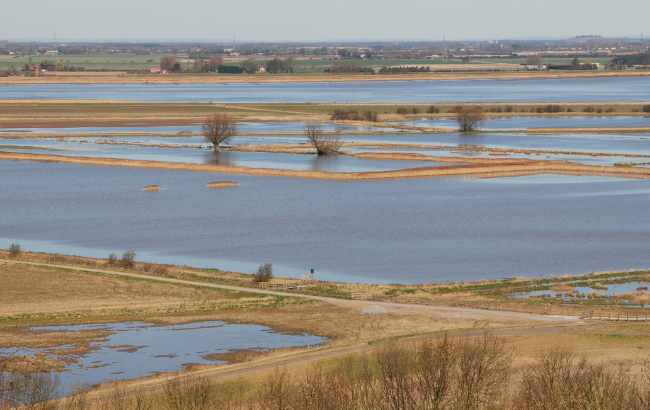
Across the UK, we are already seeing its impacts through hotter summers, more intense rainfall, flooding, drought, pressure on water resources, and disruption to services and infrastructure. As we continue to reduce emissions and accelerate towards net zero, we must also adapt to the impacts of a changing climate that are already locked in.
That’s why today, as part of the Climate and Nature moment, we've announced that the Government is investing up to £30 million to strengthen the evidence base needed for climate adaptation across the UK. In this post, I’ll delve into why this is needed.
Setting ambition
To deliver the transformative action across the whole of society and the economy that we know is needed, we need to set a clear goal for the UK’s resilience to climate change.
With that in mind, the Government has committed to setting stronger measurable adaptation objectives through the Fourth National Adaptation Programme (NAP4), due in 2028. This will set out the actions government and its partners will take to improve the UK’s resilience to climate change out to 2033. To inform these objectives, we are planning on the basis of a minimum of 2°C of warming by 2050 across the whole of government, ensuring we are aligned on the kinds of impacts we expect to see across all sectors. These objectives will be achieved by setting clear delivery plans across government.
Achieving that ambition will depend on collaboration across government, businesses and industry, civil society, academia, infrastructure operators and local communities. But it will also depend on having the right evidence available to support decision-making.
Investing in the evidence we need
Investing in adaptation evidence is an investment in resilience. It helps us move from recognising climate risks to taking informed action. It ensures that decisions made today are backed by the best available knowledge.
As we continue to face a changing climate, evidence will remain one of our most valuable tools. Not only for understanding what lies ahead, but for helping us build a safer, more resilient future for people, nature and the economy.
To help address these challenges, the Government is investing up to £30 million to strengthen the evidence base needed for climate adaptation across the UK. This includes £13 million for the Met Office to develop the next generation of UK climate information, projections and tools, alongside £17 million for a What Works Centre for Climate Adaptation.
The Met Office investment will support more advanced climate information and projections, helping decision-makers better understand future climate impacts. Meanwhile, the What Works Centre will focus on the practical side of adaptation, building evidence on which interventions work, for whom, and under what circumstances.
Underlining this commitment to improving the basis for adaptation action, following the publication of the Climate Adaptation Research and Innovation Framework (CARIF) in April 2025, the Government Office for Science has published a Research and Innovation inventory to spotlight the Government's investment in climate adaptation. Bringing together programmes funded across the current Spending Review period, it provides a comprehensive picture of the research, innovation and evidence helping the UK prepare for the impacts of a changing climate.
This is all about giving organisations the confidence to make informed decisions. Whether it is designing flood-resilient communities, protecting water supplies, helping businesses manage heat risks or ensuring critical infrastructure can withstand future weather extremes, stronger evidence leads to better outcomes.
Why this matters for local communities
Local government has a critical role to play in building resilience to climate change. By improving access to climate information and providing tailored support, local authorities can make better decisions about transport networks, housing, water management, public services and economic development.
That is why we are providing £3 million in support for Combined Authorities and their partners to strengthen climate resilience. This will help local leaders assess climate risks, develop adaptation plans and work with councils and stakeholders to prepare for future challenges.
Defra has recently established a new Local Climate Adaptation Leaders Forum, bringing together senior representatives from government departments, Combined Authorities and local government organisations. This Forum will meet four times a year, providing a vital voice for local and regional authorities to engage with and shape government’s approach to tackling the impacts of climate change.
Whether it is policymakers making investment decisions, businesses planning for future climate impacts, infrastructure operators assessing resilience, or local authorities developing adaptation strategies, better evidence will help everyone make more informed choices.
Looking ahead to a more resilient future
Adaptation is often described as preparing for the future. It is about responding to the changes we are already seeing while making smart decisions for the decades ahead.
Investing in better climate evidence is therefore an investment in resilience, helping government, businesses and communities make informed choices, target resources effectively and build a country that is ready for the challenges of a changing climate.
Today’s announcement is clear; we are supporting the move from understanding climate risks to enabling action.
2 comments
Comment by Anna Stevens posted on
I think that this is insufficient for an emergency. You can't wait for any more research evidence before you start to actually make some changes and decisions. Adaptation is all about making small incremental changes and then assessing the impact - success or not. Just do something/ anything. Tax air travel, tax frequent flyers, pull unsafe disposable barbeques from sale, plant trees which have less propensity to burn, train more arborealists, fund regenerative agriculture, make sure new homes are designed not to get too hot and invest in solar powered air conditioning. Plan where people can shelter in emergencies - all of this. More reports are just not necessary - there comes a time where you have to choose your priorities and implement them. I'd put prevention of wildfires with international agreements at the top of the list. Over 4 billion tonnes of carbon are being emitted by wildfires annually, more than 10% of total emissions - they need to be prevented whether the cost benefit analysis shows a saving or not. Our atmosphere is priceless
Comment by Jane Wilde posted on
I totally agree with Anne Stevens, it is insufficient to just keep doing research!! At the moment it hasn't rained since the beginning of June and there are wildfires everywhere! no more research. Action on increasing firefighters and firefighter equipment, Action in supporting Communities who are working very hard to set up resilience with very few resources. Action to improve local public transport, make active travel easier. Action to stop all fossil fuel exploitation. Action to tax the rich, to tax air flight, to tax aviation fuel to stop all airport expansion, to ban private jets. Action to support food growing innovation in a changed climate. Action to stop AI data bases using up our fuel land and water. Action to invest in new and improved sustainable ways of producing energy and Cooling buildings. Action to protect nature and stop building on green land. Action to put all resources in to this essential work. Action to stop spending on military and spend on the people. Action to stop supporting Wars around the world that contribute to death, destruction and CO2 emissions. Action to not allow fossil fuel Giants to influence government. Action to stamp out corruption in government. Action to stop blaming the protesters for the problem. Action to support refugees.