We’ve all seen it. Greasy fast-food packaging tossed from a car window onto the side of a road. Orange cigarette butts stamped into the pavement. Shiny crisp packets nestled in the grass at your local park.
These are all examples of littering which show careless disregard for our shared public places. But what have they got in common with criminal gangs dumping tonnes of industrial waste in a woodland, or mattresses left in a roadside lay-by?
They are all types of waste crime. They all damage the environment and ruin our pride in where we live. Together they cost the economy an estimated £1 billion a year in England alone. And the Government is taking a zero-tolerance approach to all forms of waste crime.
This includes giving local authorities in England the power to issue higher fixed penalty notices for littering of up to £750 and fly-tipping up to £5,000.
This blog will explain exactly what we mean when we talk about littering, fly-tipping and large-scale illegal dumping, and how you can report them.
What is littering
Littering is the dropping or leaving of small amounts of waste in a public place. This is usually less than a black bin bag. Common examples include food wrappers, cigarette butts, chewing gum and drinks cans. This is something that sadly we’ll all be familiar seeing on our high streets, parks, roads and beaches.
It is an offence under the Environmental Protection Act 1990 to litter. Local authorities have the power to issue fixed penalty notices. Failure to pay can lead to prosecution.
To report littering in your area, contact your local council.
What is fly-tipping
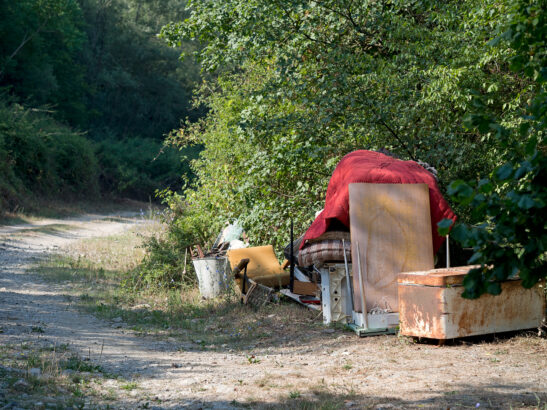
Fly-tipping is the illegal dumping of larger amounts of waste. Unlike littering, fly-tipping tends to involve larger quantities such as several bin bags of rubbish, furniture, garden waste or small commercial waste loads.
This could look like an old washing machine dumped at the side of a road, or a sofa left on a street corner. Dumping at these sites can quickly accumulate as others see it as a green light to illegally dispose of their own unwanted items. Before long, these sites become an ugly and dangerous blight on neighbourhoods and public spaces.
Fly-tipping is a serious criminal offence. Penalties can include significant fines, driving licence penalty points and a requirement to pay the full costs of clearing up the waste. Councils also have the power to seize and crush vehicles used in fly-tipping.
If someone offers to collect your waste, make sure they are registered on the Environment Agency's register of Waste Carriers, Brokers and Dealers before handing anything over. It's a quick and simple check that helps ensure your waste is disposed of legally and responsibly.
To report fly-tipping, contact your local council.
What is large-scale illegal dumping
Large-scale illegal dumping is a more serious form of waste crime, and its consequences are felt by whole communities. Residents living near illegal dumping sites can face unpleasant smells, vermin and long-term environmental damage on their doorstep.
This type of waste crime typically involves a lorryload (around 20 tonnes) or more of waste, often hazardous or industrial waste or large quantities of construction materials.
Unlike fly-tipping, which is usually carried out by individuals looking to avoid disposal costs, large-scale illegal dumping is frequently associated with organised criminal groups who profit from illegally managing waste.
Those convicted of large-scale illegal dumping can face severe penalties including imprisonment, significant fines, driving licence penalty points and orders to pay the full cost of clean-up. Courts can also recover profits made from illegal waste management.
If you suspect large-scale illegal dumping, do not report it to your local council, instead, contact the Environment Agency's 24-hour incident hotline on 0800 80 70 60. You can also report it anonymously to Crimestoppers online or by calling 0800 555 111.
Littering, fly-tipping and large-scale illegal dumping affect us all and we can all play a part in tackling them. If you spot any of these crimes, report it.
Together, we can help keep our communities clean.
1 comment
Comment by Patrick Johnson posted on
Fly tipping would be far less prevalent if there was no charge to industry for taking waste to legitimate land fills and recycling centres. By charging we are creating an incentive to illegal fly tipping.