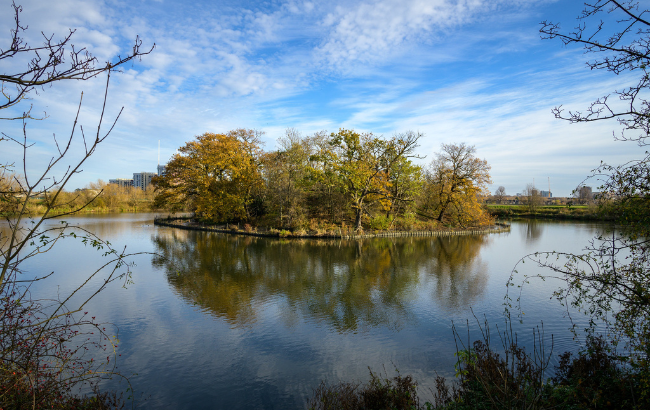
Nature is fundamental to our lives and our economy. Healthy soils help us grow food. Rivers and wetlands provide clean water and help protect communities from flooding. And thriving habitats support wildlife and make the places where we live more resilient.
But nature is under pressure. After a summer of extreme heat, the need to restore nature and make our farms, businesses and communities more resilient is clearer than ever.
Restoring it at the scale we need will take all of us: government, businesses, investors, farmers, land managers and local communities. Public investment remains essential, but private finance also has an important role to play in supporting nature recovery.
I’m Will Lockhart, Deputy Director for Nature Markets and Investment at Defra. Earlier this year, I wrote about how we are building trust in markets that help investors channel funding into nature’s recovery.
Today, to mark Finance Day at COP17 of the Convention on Biological Diversity, we are taking another step forward with the publication of Growing Places: Mobilising Private Finance for Local Nature Recovery. This document sets out how we are working to help connect private finance with the needs and opportunities of places all across England and the UK.
Growing Places establishes the government’s overarching place-based approach to mobilising private finance for nature recovery and sustainable growth.
It builds on what we heard from our Call for Evidence on Expanding the Role of the Private Sector in Nature Recovery and the Voluntary Carbon and Nature Markets Consultation: businesses and investors need long-term certainty, the right incentives, and support to unlock investment in nature. Growing Places takes forward that work, focusing particularly on how we can make investment happen on the ground.
"The UK's ability to withstand climate-related risks depends on multiplying private investment in nature. This important document has the right recipe, and Government must take action to implement these plans with regulation to make sure polluters and businesses pay to restore the ecosystems that should defend us all against drought, flood, fire and crop failure". Richard Benwell, Chief Executive at Wildlife and Countryside Link.
From national ambition to local action
The idea behind Growing Places is simple: the people who know a place best should have an important role in shaping its future.
Local leaders, farmers, land managers, businesses and communities understand their landscapes and local economies. By combining that knowledge with a clear national framework and private investment, we can support healthier, more resilient places.
Growing Places, therefore, focuses on three areas: growing demand for investment in nature and resilience; building confidence in nature markets; and developing a stronger pipeline of local projects ready for investment.
Backing farmers and healthy soils
Farmers and land managers are central to delivering nature recovery. Healthy soils underpin food production as well as providing wider benefits for nature.
Through Soilshot, an initiative described in more detail in Growing Places to find and scale new ways to improve soil health, we will explore how private finance can support productive, resilient and sustainable farming. This follows a recommendation from Baroness Batters’ Farming Profitability Review.
Growing Places also describes how the recently announced private finance taskforce will also work with industry to increase private investment in sustainable farming in England.
This responds to calls from agri-food sector stakeholders, who highlighted the importance of clear policy, targets, and standards, blended finance and better environmental data to drive investment and environmental performance.
Investing in resilience
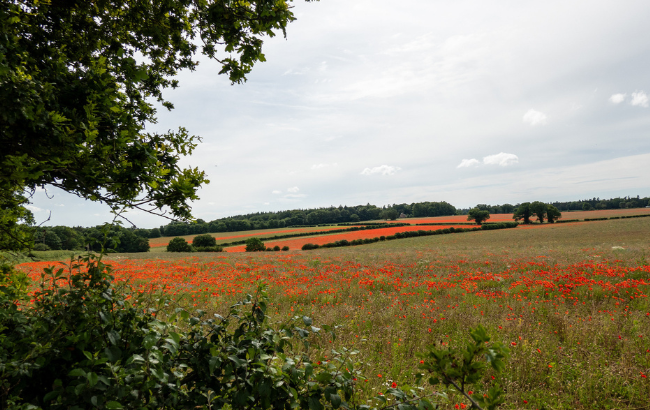
We also want to harness investment in nature to help make communities more resilient to flooding and other environmental pressures.
Growing Places sets out how we are working closely with the FloodAction Coalition to learn from its pathfinder projects in Cambridgeshire and Greater Manchester, including how nature-based approaches to flooding, water resources and water quality can be scaled into wider regional investment.
We can already see the potential of this approach in Yorkshire, where the Aire Resilience Company brings businesses, landowners and public bodies together to fund natural flood management. Public funding supports the upfront work, while local businesses contribute towards ongoing maintenance, including payments to land managers.
To complement this work, Defra will continue to support the Green Finance Institute to bring businesses and land managers together to explore how nature-based solutions can strengthen local economies. This will build on the Institute’s analysis of business demand and its more detailed work in Norfolk and Suffolk.
“Private finance can help restore nature at scale when we create sustained demand, credible long-term revenue streams and practical place-based delivery. Resilience has the potential to become an important part of that revenue base.” Rhian-Mari Thomas, Chief Executive Officer, Green Finance Institute.
Making it easier to invest in nature
Nature does not fit neatly into boxes. Restoring a wetland, for example, can create habitat for wildlife while helping to manage water and tackle climate change. But financing the project can be complicated when different funding sources want to fund different outcomes.
That is why we are publishing proposed principles in Growing Places for combining environmental payments. The aim is to make it easier to finance projects delivering multiple environmental benefits with multiple different payment streams, while maintaining transparency and environmental quality.
These are proposals, not changes to existing schemes. We want to hear from farmers, land managers, businesses, investors and others, so we will be holding webinars and roundtable discussions over the autumn and winter to help shape our approach to these principles. If you wish to share any feedback, or to take part in any relevant session, please contact us.
Growing a pipeline of local projects
Finally, investment needs a clear pipeline of projects to invest in. Growing Places outlines how we are working with Local Nature Recovery Strategy (LNRS) lead authorities to invest in delivery partnerships and project pipelines. We are also looking at further ways we might be able to support projects in becoming market ready.
The aim is to help more places turn their ambitions for nature into credible opportunities for investment, while ensuring those projects remain rooted in local environmental priorities.
As highlighted in Growing Places, this approach is already taking shape in the West Midlands, where a new Nature Investment Hub is helping package local nature projects and connect them with investors, turning the priorities in the region’s LNRS into action.
Earlier this year, I described our work to build England’s nature markets as a milestone, not a finish line. Growing Places is the next part of that journey.
At COP17 in Armenia, countries are focused on turning global ambition for biodiversity into delivery. At home, we are doing the same: bringing together local knowledge, public investment and private finance to restore nature and build more resilient places for the future.
Leave a comment