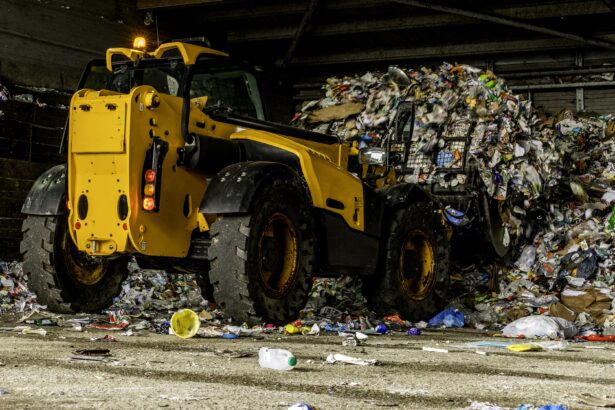
Waste crime is not new, but in recent years it has escalated into a more sophisticated, costly and damaging criminal enterprise. It costs the economy an estimated £1 billion every year, blights our communities, and causes serious harm to the environment. From vast illegal dumps to fraudulent disposal records, criminal operators have long exploited gaps in the system and undermined legitimate businesses.
Defra recently published its Waste Crime Action Plan for England, setting out how we will tackle these offences through tougher regulation, enhanced enforcement capabilities and a commitment to accelerating the clean-up of the most harmful illegal waste sites.
Prevention means strengthening the regulatory regime to make it harder for waste crime to take place in the first place. We will tighten the rules around waste carriers, brokers and dealers to close the loopholes which criminals exploit.
A key part of this effort to prevent waste crime is digital waste tracking.
What is digital waste tracking?
The introduction of digital waste tracking is an important tool in the fight against waste crime. By creating a clear, near real-time record of where waste goes at every stage of its journey, the service makes it significantly harder for criminal operators to dispose of waste illegally. Where there were once gaps that could be exploited, there will now be a complete, auditable trail.
By generating consistent and high-quality data across the entire waste chain, digital waste tracking will enable a more intelligence-led approach to regulation. This insight will allow the Environment Agency and enforcement bodies to make more effective, better-informed decisions when tackling waste crime.
Digital waste tracking is becoming a reality
The launch of the public beta for the ‘Report Receipt of Waste’ service marks a major step forward. This service allows waste receivers to submit data on the waste they handle. It moves us closer to a fully accountable waste system where every movement of waste can be tracked, verified, and audited.
Digital waste tracking is a shift away from the current largely paper-based, outdated and overly bureaucratic system. For legitimate businesses, this will speed up admin work and cut red tape, bringing clarity and confidence.
A more transparent and accountable waste system is not just about regulation; it is about protecting businesses, people and places.
Supporting businesses with a phased roll-out
Digital waste tracking is being rolled out in a phased approach to give businesses the chance to adapt their processes. The first phase begins with the launch of the public beta this month which then becomes mandatory to use from October 2026.
This applies to all licensed or permitted operators of waste receiving sites, like recycling centres, landfills and treatment facilities. Phase 1 will apply to around 12,000 permitted waste receiving sites.
The expansion of the service for other operators will follow, with more than 100,000 operators set to be in scope.
What digital waste tracking means for you
Digital waste tracking is just one of the measures in our Waste Crime Action plan which will help to close the gaps that criminals exploit, bring more offenders to justice and restore pride in our communities.
If you work in the waste sector, read the latest guidance on digital waste tracking and find out more about how this new service will work for your business.
For permitted waste receiving sites, be sure to sign-up to use the public beta. If you are someone who develops or provide software for the waste sector, get in touch with our team about integration with the service by emailing WasteTracking_Developers@defra.gov.uk.
This is an opportunity to have your say and shape digital waste tracking, helping us to develop a reliable and effective service.
3 comments
Comment by Adam Stuart posted on
Every 2 days is unachievable for our business. What was wrong with the quarterly returns?
Comment by Patrick Johnson posted on
Waste reprocessing needs to be covered by rates charged to local businesses based on type and size of business. The actual collection and disposal would not be charged directly. Ways could be developed to refine this. That way there little market for illegal waste dumping etc.
Comment by David Oram posted on
Thinking differently .All clearance companies have to open an account with there local waste centre .So when the clearance company quotes they tell the customer the waste charge and labour costs .The customer then pays the waste centre directly so name address details of waste all on a company system for the waste. The clearance company only gets the labour costs.So the clearance company has no incentive to dispose in a field.As the waste has then been tracked from customer to the local waste centre and signed off when disposed of .Some items like fridges have different charges and go to different waste centres but this would have to change all would have to go to only one location at the cost of what that company charges.just an idea