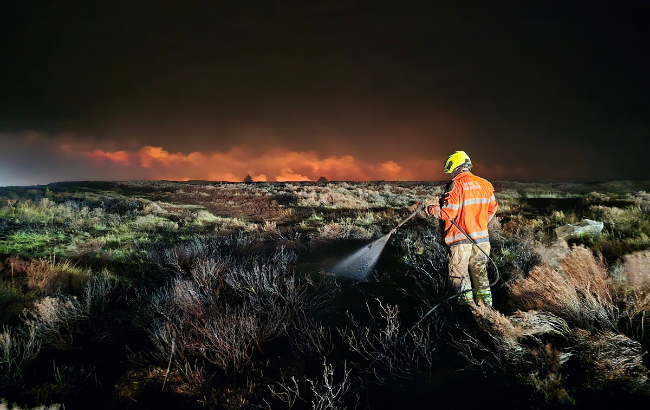
This year, we have seen largescale wildfires decimate landscapes at home and across Europe.
In the UK, wildfires have affected moorland, woodlands, grasslands, farmland and community green spaces close to homes and infrastructure.
In fact, Prime Minister Andy Burnham has announced that he will soon host a wildfire summit, focused on how we can increase our resilience to wildfire.
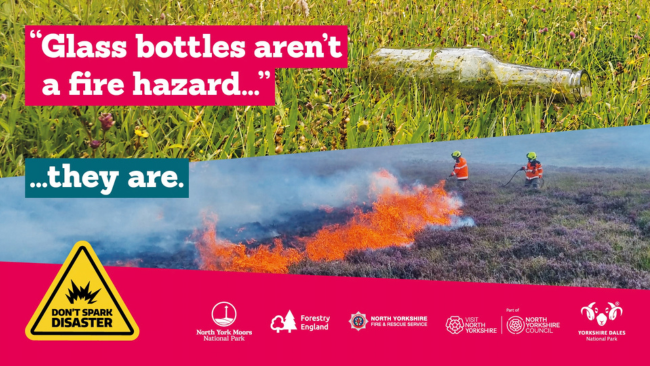
As we experience more frequent periods of hot, dry weather, activities that once carried relatively little perceived risk can have far greater consequences. Disposable barbecues, campfires, discarded cigarettes, glass bottles and reflective litter can all increase ignition risk.
As Communications Officer at the North York Moors National Park Authority, I have personally seen how a single ignition can escalate into a major incident.
One spark can have a devastating impact
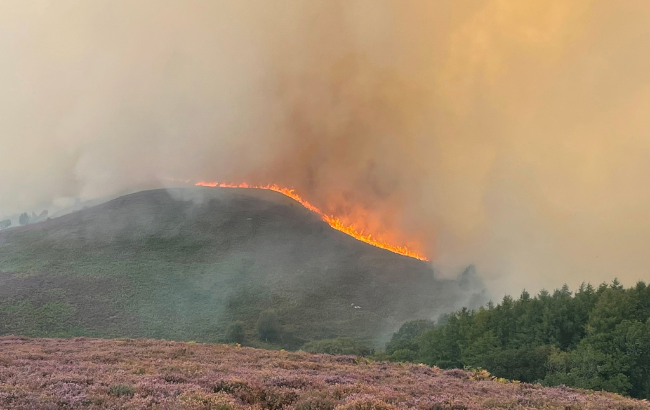
It’s been a year since a wildfire affected around 20 square kilometres of the North York Moors National Park, becoming one of the largest and most prolonged incidents ever faced in the area.
The Fylingdales Moor wildfire began in late June 2025 and wasn't formally closed until 6 months later. An investigation by North Yorkshire Fire & Rescue Service found the most likely cause of the blaze was cooking activity with a gas burner or campfire in a remote part of Langdale Forest.
Strong winds, dry vegetation and underlying peat allowed the fire to breach an initial firebreak and spread rapidly across grazed moorland, while the presence of historic unexploded ordnance from former military training activity added significant complexity and risk to firefighting operations.
A nearby secondary fire that broke out in August was caused by a cigarette, thought to have been discarded by a bystander who had stopped their vehicle to observe the main incident.
Communication needs to encourage behaviour change
The fire highlighted the importance of clear, timely communication and strong partnership working. We need to think differently about how we talk about wildfire risk in the UK, to encourage people to change their behaviour and reduce that risk.
Communicating fire risk is not new to the National Park Authority. When Met Office data indicates particularly dry ground conditions and the potential for fires to spread rapidly, Extreme Fire Risk warning signs are erected at key locations across the North York Moors. Regional media are alerted through a press release, and the public are reminded how to help prevent fires and what to do if they see smoke or flames.
This approach has been effective, but it has largely been a seasonal response to periods of increased risk - a message delivered when conditions require additional caution.
As wildfire risk becomes a recognised consequence of a changing climate, we need to move beyond simply communicating when the risk is high, towards building a wider understanding that wildfire is a growing reality for the UK, not a distant threat associated with other countries.
Behaviour change is a form of climate adaptation
Working for a National Park Authority, I usually encounter climate adaptation through large-scale interventions such as restoring peatlands or reducing flood risk by improving river catchments.
Yet adaptation also depends on the cumulative effect of everyday decisions. For wildfire, behaviour change is one of the most immediate and cost-effective forms of climate adaptation available to us.
It is important that we avoid the potentially dangerous assumption that wildfires are caused only by deliberate or reckless behaviour, rather than recognising that risk also exists when everyday activities are carried out in hazardous conditions.
The challenge is not simply to tell people what to avoid, but to help them understand that the environmental conditions in which those actions take place have changed.
Don’t Spark Disaster
In 2026, we have taken a different tack. ‘Don’t Spark Disaster’ has been designed as a broader, longer-term awareness campaign, moving beyond seasonal warnings towards a coordinated approach to wildfire prevention.
A key difference has been the scale of partnership involvement, bringing together North Yorkshire’s two National Parks with those working across the Fire and Rescue service, forestry, tourism and the wider Local Resilience Forum. This has enabled wildfire prevention messaging to extend beyond a single National Park boundary and across North Yorkshire.
What has been particularly striking is the level of engagement with the campaign’s educational content. Videos showing the heat generated by disposable barbecues through an infrared camera proved especially effective in helping audiences visualise the risks associated with these items in dry conditions.
Partnerships with online creators such as Whitby Mumbler and Muslim Hikers have also helped us explore lighter, more accessible ways of encouraging lower-risk choices, such as swapping barbecues for picnic foods that require no cooking. This messaging is backed up by increased patrols at higher-risk locations, with Assistant and Voluntary Rangers providing advice and reinforcing the campaign’s fire safety messages.
The early results suggest that practical, relatable wildfire prevention messages can achieve significant public engagement. As the campaign develops, we will continue building on this foundation, exploring how positive messages around responsible countryside enjoyment can support a stronger culture of wildfire prevention. As with any campaign linked to climate and environmental risk, responses have not been universally positive. Some people remain sceptical about the seriousness of climate change or its connection to wildfire risk. Our approach has been to respond with clear evidence, scientific fact and trusted sources of information.
As wildfire becomes recognised as a domestic climate risk, National Parks have an important role in supporting adaptation at a landscape scale, while also helping people understand how these changes affect the places they live, work and enjoy.
Wildfire resilience involves many aspects of landscape management, including work to restore healthy peatlands that retain water and are better able to withstand dry conditions.
But alongside this, one area where communities and visitors can have an immediate impact is reducing avoidable ignitions. By helping people understand how everyday actions interact with changing environmental conditions, we can support a stronger culture of prevention and help protect the landscapes we all value.
2 comments
Comment by Rob Yorke posted on
The UK can learn a lot from how other countries in Europe are preparing for wildfires; this published by the EU earlier this year is integral to communicating related issues including the range of land management practices, especially as more woodland is created, to help build resilience within landscapes seeking to prevent large-scale wildfires - https://agriculture.ec.europa.eu/cap-my-country/sustainability/environmental-sustainability/wildfire-prevention-and-restoration-agriculture-and-forests_en
Yours etc, Rob
Comment by Tanya Eyre posted on
We are encouraged to see vegetation slowly regenerating on the fire site. Cotton grass and heath rush from their roots, and wetter areas have fared better. As have patches that were controlled burnt by our ranges in the winter prior to the 2025 wildfire, as part of our stewardship agreement as a conservation moor- in those areas, 2 and 3 year old heather has flowered. The NYM NPA are beginning an ambitious restoration project.
Fylingdales Moor Education officer